The $318,152 Mistake: Why DIY Bookkeeping Without Knowing the Basics Is a Gamble You Can't Afford
A concise guide that identifies common DIY bookkeeping errors (debits and credits, GST coding, chart of accounts, reconciliations), summarises real ATO consequences, and gives a practical monthly checklist and immediate actions to reduce audit and penalty risk.
BUSINESS OWNERS
Justwise Bookkeeping Business
6/30/20264 min read
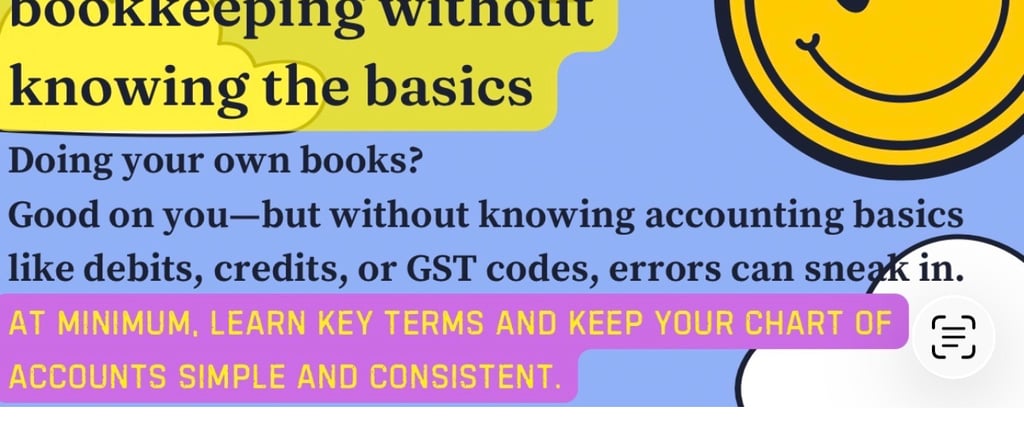
Good on you for having a crack at your own books. Many business owners start exactly the same way—it saves money upfront, and you feel in control.
But here’s the hard truth: bookkeeping without understanding the basics isn't saving money—it's storing up problems.
One Small Mistake, Six Figures in Penalties
Let’s look at what can actually happen.
Sarah, a hairdresser operating as a sole trader, thought she was managing her books fine. She used a tax agent for her returns. But the ATO identified discrepancies between her reported sales and what was actually deposited. During an audit, they found cash deposits sitting in her personal bank account that hadn't been recorded as business income.
The result? Her income tax returns were amended to include the unreported income. She was hit with $318,152 in income tax and GST shortfalls, plus a $159,075 penalty for providing misleading information.
That's over $477,000—for a mistake that started with not knowing how to properly record cash income.
And Sarah isn't alone. Another business—a bistro in Adelaide—had more than $1.4 million in unreported income identified across two years and was hit with close to $785,000 in penalties.
These aren't deliberate fraud cases. They're business owners who didn't understand the basics and made innocent mistakes that the ATO doesn't treat as innocent.
The Real Cost of "Not Knowing What You Don't Know"
DIY bookkeeping without proper knowledge doesn't just risk ATO penalties. Here's what else can go wrong:
Misclassified Transactions
This is one of the most common DIY mistakes. You might think it's harmless, but incorrect categorisation affects your profit and loss accuracy, GST reporting, income tax obligations, and even employee entitlements. One miscoded expense might seem small. Hundreds of miscoded transactions add up to materially wrong BAS figures.
Incorrect GST Treatment
GST is more complex than most business owners realise. Common errors include claiming GST credits on non-taxable purchases, failing to report GST on income, and incorrectly reporting GST on imports and exports. Incorrect GST coding is the #1 BAS mistake in Australian small businesses. When GST coding is wrong, every BAS figure becomes unreliable.
Missing Key Deadlines
DIY bookkeeping often happens after hours—juggling numbers when you're already tired. This increases the chance of missing BAS lodgement dates, superannuation guarantee payment due dates, and STP reporting deadlines. Late or incorrect BAS lodgements are one of the fastest ways to attract ATO attention.
No Real-Time Financial Visibility
When you're managing your own books irregularly, you lack visibility over your cash flow, profitability, and upcoming liabilities. You can't make informed business decisions if you don't know your real numbers.
Increased Audit Risk
The ATO has ramped up its use of data-matching technology and AI to identify anomalies in tax returns and BAS. If your DIY bookkeeping doesn't align with industry benchmarks or bank data, you're waving a red flag.
The Basics You Actually Need to Know
If you're going to do your own books, here are the fundamentals you can't afford to ignore:
Understand Debits and Credits
Every transaction involves at least one debit and one credit, and they must be equal. If your debits don't equal your credits, something is wrong. This isn't optional—it's the foundation.
Keep Your Chart of Accounts Simple and Consistent
Your chart of accounts is your framework for managing business transactions—a list of categories that tracks what money is coming in and what your expenses are. Keep it simple. Too many categories create confusion. Too few hide important details. And once you set it up, stick to it—consistency is everything.
Know Your GST Codes
Incorrect GST coding is the primary source of BAS errors in Australian SMEs. Take the time to understand which GST codes apply to your common transactions, and lock codes for recurring transactions to prevent auto-coding errors.
Separate Business and Personal Finances
This cannot be emphasised enough. Using one account for everything might feel convenient, but it makes tax time a nightmare and increases your audit risk. If you're a sole trader, a separate business bank account makes your records easier to manage. If you're a partnership, company, or trust, it's legally required.
Keep Records for Five Years
By law, your records must explain all transactions, be in writing, and be kept for five years. If you don't keep the right tax records, you may incur financial penalties or be required to complete a record-keeping course.
A Simple Checklist for DIY Bookkeepers
If you're committed to doing your own books, run through this checklist monthly:
Reconcile all bank and credit card accounts against your records
Review GST codes on all transactions—don't rely on auto-coding
Check that all income (including cash) has been recorded
Verify that business and personal transactions are completely separate
Review your chart of accounts—are categories still relevant and consistent?
Set calendar reminders for all upcoming BAS and superannuation deadlines
When to Ask for Help
Here's the honest truth: bookkeeping is more than just entering data—it requires reconciliations, tracking payables and receivables, and staying ATO-compliant.
If any of this feels overwhelming, or if you're not 100% confident in your numbers, get help before the ATO comes asking questions. Early conversations with a bookkeeper or accountant can identify issues before they escalate, clarify obligations you may not be aware of, and save significant time and cost later.
DIY bookkeeping might seem manageable in the early days, but as your business grows, so do the risks. Avoid unnecessary stress, costly mistakes, and time-consuming errors.
Need a second pair of eyes on your books? JustWise Accounting helps Mackay businesses get their bookkeeping right—from setting up a simple chart of accounts to BAS preparation and lodgement. Get in touch for a free consultation.
Stay in Touch
© 2025 JustWise Accounting. All rights reserved. ABN 85 581 353 385
⚠️ We respect your privacy. Unsubscribe anytime. (under subscribe button)







Serving Australia-wide
Justwise acknowledge the Traditional Owners of the lands where we operate and pay respect to Elders past and present.